THE PAINFUL JULY OF THE ALBANIANS
We have now grown used to all kinds of scandals, and to the tragedy of life as well, just as a person gets used to smoking. It seems our official calendar must also add getting used to July, which for Albanians is becoming a symbol of revolt against the state and, in this context, embassies become objects of exploitation by the masses, poctn, tra, d? The desire to flee this country seems to remain the constant anguish of rare Albanians.
What happened these days in Tirana, and the desperate attempts to flee in Vlora, have left people stunned. It has psychologically destroyed them and crushed them spiritually. The exact number of people is hard to know; however, more than 5,000 people gathered around 10 p.m. in front of the embassies, from “Rruga e Durrësit” onward. Just as two years earlier they had rushed the embassies, this time the leap over the threshold of prosperity and escape toward Europe was no longer an option; that alternative now no longer exists.
Knowing this, the crowd did the simplest thing: it destroyed and smashed the embassies’ plaques, the windows of the shops, r?full, and then until around 3 a.m. it stood in the streets in front of the embassies. Any normal person asks: who is to blame, why must this happen?
At first glance, it seemed that after the democratic elections a new era would begin, but that did not happen; it seemed as though everything would be quickly put right, but that did not happen either. The heavy emotional climate before the elections and the lack of ways to overcome the crisis have severely shaken the cohesion of Albanians. And the government? In the irony of fate, that evening television was showing chronicles of these transformations and then? paraand? of the president of the seven most industrialized countries before they entered the meeting, a farce, pointless, as if nothing had happened. Toward the end, a dry statement is given about an attempt at exodus in Durrës.
It seems to me that the state is not learning to speak honestly with people.
ILIR ZVERI
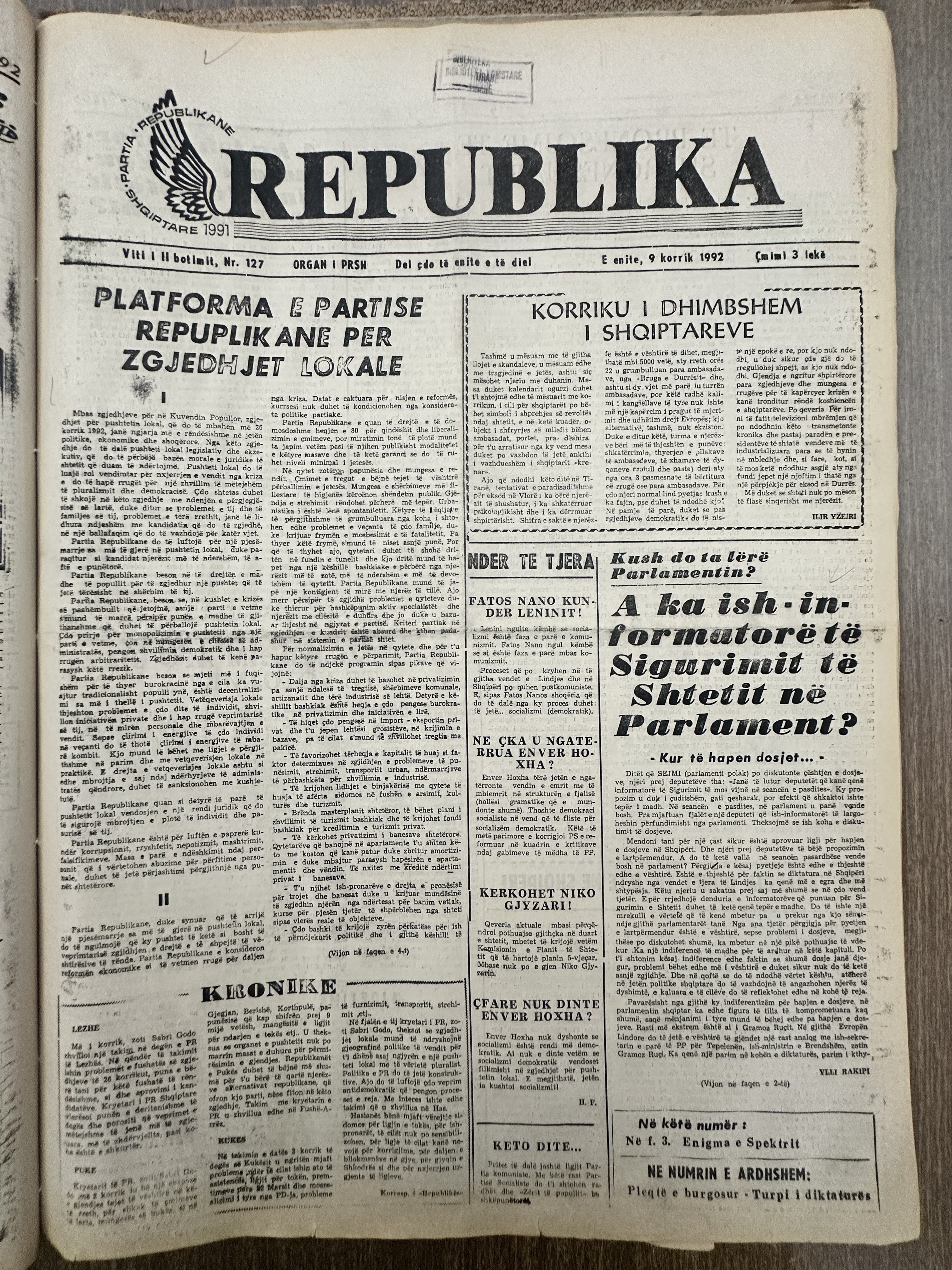
KORRIKU I DHIMBSHEM I SHQIPTAREVE
Tashmë u mësuam me të gjitha llojet e skandaleve, u mësuam edhe me tragjedinë e jetës, ashtu siç mësohet njeriu me duhanin. Mësa duket kalendari ynë zyrtar duhet t'i shtojë edhe të mësuarit me korrikun, i cili për shqiptarët po bëhet simbol i shprehjes së revoltës ndaj shtetit e, në këtë kuadër, objekt i shfrytëzjes së miletit bëhen ambasadat, poctn, tra, d?shira për t'u arratisur nga ky vend mesa duket po vazhdon të jetë ankthi i vazhdueshëm i shqiptarëve të rrallë.
Ajo që ndodhi këto ditë në Tiranë tentativat e pamatëdisshme për eksod në Vlorë i ka bërë njerëzit të shushatur. I ka shkatërruar psikologjikisht dhe i ka dërrmuar shpirtërisht. Shifra e sakta e njerëzve të eshëtë e vështirë të dihet, megjithatë mbi 5000 veta, aty rreth orës 22 u grumbulluan para ambasadave, nga “Rruga e Durrësit” deri ashtu si dy vjet më parë iu turrën ambasadave për këtë radhë kali i majit i kangellave të tyre nuk ishte me një kapërcim i pragut të mirqenies dhe veditim drejt Evropës; kjo alternativë, tashmë, nuk ekziston.
Duke e ditur këtë, turma e njerëzve bëri më të thjeshtën e punës: shkatërrimin, thyerjen e pllakave të ambasadave, të xhamave të dyqaneve r?full dhe pastaj deri aty nga ora 3 pasmesnate të dërritura e rrugë e së para ambasadave. Çdo njeri normal lind pyetja: kush e ka fajin, pse duhet të ndodhë kjo?
Në pamje të parë, duket se pas zgjedhjeve demokratike do të nis- të një epokë e re, por kjo nuk ndodhi, u duk sikur çdo gjë do të rregullohej shpejt, as kjo nuk ndodhi. Gjendja e rënduar shpirtërore para zgjedhjeve dhe mungesa e rrugëve për të kapërcyer krizën e kanë tronditur rëndë kohezionin e shqiptarëve. Po qeveria? Për ironinë të fatit televizioni mbrëmjen e po ndodhnin këto transformime kronika dhe pas? paraand? e presidentit të shtatë vendeve më të industrializuara para se të hynin në mbledhje, dë fars, kot, si të mos ketë ndodhur asgjë aty nga fundi jepet një njoftim i thatë nga një përpjekje për eksod në Durrës.
Më duket se shteti nuk po mëson të flasë sinqerisht me njerëzit.
ILIR ZVERI
IL LUGLIO DOLOROSO DEGLI ALBANESI
Ormai ci siamo abituati a ogni tipo di scandalo, ci siamo abituati anche alla tragedia della vita, così come ci si abitua al fumo. A quanto pare il nostro calendario ufficiale dovrebbe aggiungere anche l’abitudine a luglio, che per gli albanesi sta diventando il simbolo della protesta contro lo Stato e, in questo quadro, le ambasciate diventano oggetto di sfruttamento delle masse, poctn, tra, d? Il desiderio di fuggire da questo Paese sembra continuare a essere l’angoscia costante dei pochi albanesi.
Ciò che è accaduto in questi giorni a Tirana e i disperati tentativi di esodo a Vlora hanno lasciato la gente attonita. L’hanno distrutta psicologicamente e schiacciata nel profondo. Il numero esatto delle persone è difficile da sapere; tuttavia, oltre 5.000 persone si sono radunate intorno alle 22 davanti alle ambasciate, da “Rruga e Durrësit” in poi. Come due anni prima si erano lanciati contro le ambasciate, questa volta il salto oltre la soglia del benessere e verso l’Europa non era più un’alternativa; quella possibilità ormai non esiste più.
Sapendolo, la folla ha fatto la cosa più semplice: ha distrutto, rotto le targhe delle ambasciate, i vetri dei negozi, r?full e poi fino alle tre del mattino è rimasta nelle strade davanti alle ambasciate. A ogni persona normale sorge la domanda: chi è il colpevole, perché deve accadere questo?
A prima vista, sembrava che dopo le elezioni democratiche dovesse iniziare una nuova epoca, ma non è stato così; sembrava che tutto si sarebbe sistemato rapidamente, ma anche questo non è accaduto. La pesante condizione spirituale prima delle elezioni e la mancanza di vie per superare la crisi hanno scosso profondamente la coesione degli albanesi. E il governo? Per ironia del destino, quella sera la televisione trasmetteva servizi su queste trasformazioni e poi? paraand? del presidente dei sette paesi più industrializzati prima di entrare nella riunione, una farsa, inutile, come se non fosse successo nulla. Verso la fine viene dato un annuncio secco su un tentativo di esodo a Durrës.
Mi sembra che lo Stato non stia imparando a parlare con sincerità con la gente.
ILIR ZVERI
CHRONICLE
LEZHE
On 4 July, Mr. Sabri Godo held a meeting with the PR branch of Lezhe. At the center of the meeting were the problems of the 26 July election campaign, the work already done for this important campaign, as well as relations with the...
THESE DAYS...
The Communist Party is expected to be declared illegal. On this occasion, the ranks of the Socialist Party will grow and “Zëri i popullit” will become readable [?]
AMONG OTHER THINGS
FATOS NANO AGAINST LENIN
Lenin insisted that socialism is the first stage of communism. Fatos Nano insists that it is the first stage of anti-communism.
The processes taking place throughout the Eastern countries and in Albania...
When the files are opened...
Who will leave Parliament?
Are there former informers of the State Security in Parliament?
- When the files are opened...
On the days when SEJMI (the Polish parliament) was discussing the issue of the files, one of the d...
BIBLIOTEKA SHKODËR TREGTARE [?]
PDS - ALBANIAN REPUBLICAN PARTY 1991
REPUBLIKA
2nd year of publication, No. 127
ORGAN OF PRSH
Published every Thursday and Sunday
Thursday, 9 July 1992
Price 3 lek
PLATFORM OF THE REPUBLICAN PARTY FOR THE LOCAL ELECTIONS
After the elections for the People’s Assembly, the elections for local government, to be held on 26 July 1992, are the most important event in political, economic and social life. These elect...
other
In this issue:
On p. 3. The Enigma of the Spectrum
IN THE NEXT ISSUE:
Imprisoned old people - The dictator’s shame